


How to Choose an Ergonomic Chair Without Getting It Wrong
Most people looking for an ergonomic office chair are focusing on the wrong things.
And I get it — it’s confusing out there.
Prefer to watch instead? I walk through this step-by-step in the video below.
It’s not just foam vs mesh, or cheap vs expensive. You’re bombarded with adverts, “best chair” lists, and glossy desk setups. One minute you’re clicking a Facebook ad, the next you’re convinced you need a £1,200 chair or you’re missing out.
Let me simplify it for you.
If you’re buying something decent, the sweet spot is around £350–£650. That’s where you’ll usually find chairs that do what they’re supposed to do — support your body, adjust to you, and last.
I’ve waded through a lot of chairs through my clinic work and building Well Adjusted Seating. This guide is everything I’d tell a patient or customer sitting in front of me.
Why Most People Get It Wrong
The biggest issue?
We rush it.
Often because we’re in pain.
That makes us vulnerable to marketing, buzzwords, and quick decisions. We’re also in a “I want it now” culture — but this isn’t something to rush.
You wouldn’t rush eye surgery. You wouldn’t rush building an extension on your house.
So don’t rush what is essentially a 10–15 year investment in your comfort and spinal health.
Because that’s what you’re really buying — not just a chair, but something that helps manage your back over thousands of hours of sitting.
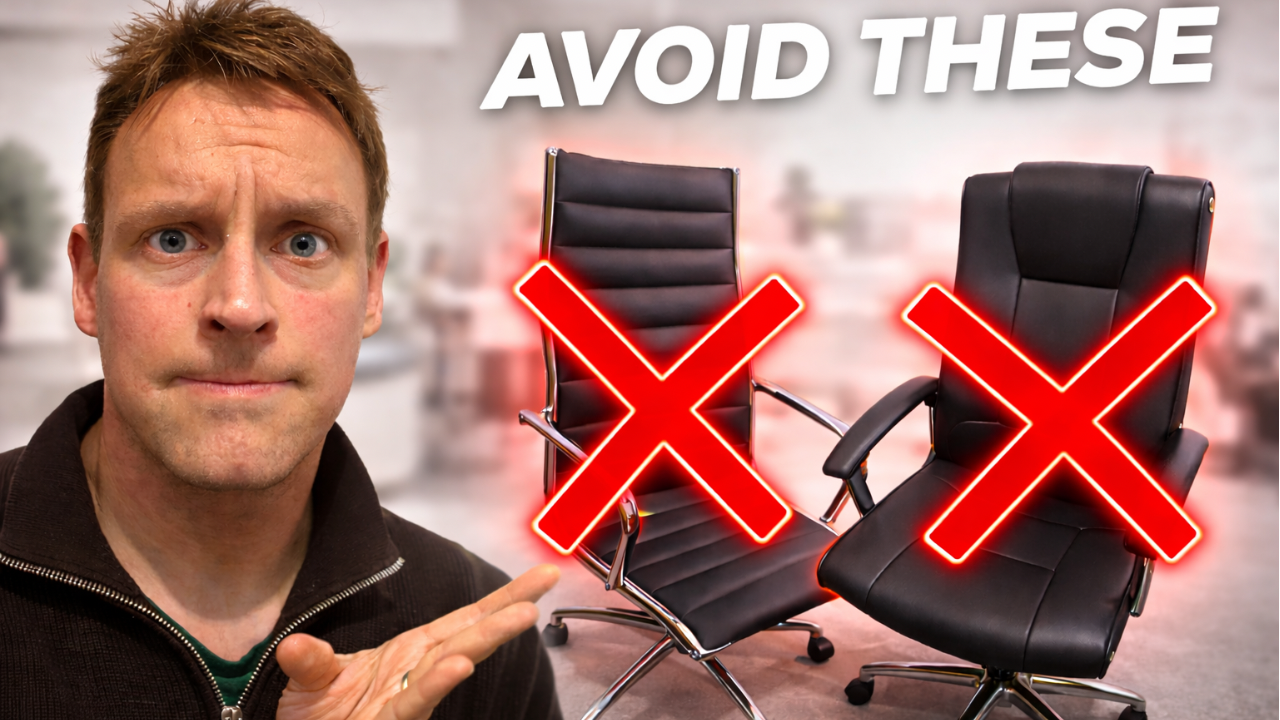
Mistake #1: Buying on Looks
This is probably the most common one.
You see a chair in a beautifully styled office, a gaming setup, or a minimalist apartment… and you buy into the lifestyle.
Then it arrives.
And suddenly it’s just… a chair. Sitting in your spare room. Looking nothing like the advert.
A bit like a child’s toy — exciting in the shop, underwhelming at home.
Don’t buy the lifestyle. Buy the fit.
Mistake #2: Chasing Brand Names
Big brands feel safe. And sometimes they are.
But here’s what actually happens:
- You search once
- You get targeted relentlessly with ads
- Suddenly that brand feels like the only option
That’s not always because it’s the best chair — it’s because it’s the best marketed.
Also, more expensive doesn’t always mean better for you.
Some high-end chairs are brilliant, but they can also be overly complex or just not suited to your body, your desk, or the way you actually work.
The Real Key: Adjustability
This is where most people go wrong — or more accurately, what they completely overlook.
I’ve lost count of the number of workstation assessments I’ve done where someone says:
“My back’s been killing me for months…”
And when I ask what they’ve adjusted on their chair…
“Just the height.”
That’s it.
Thirty seconds later, with a few tweaks, they feel completely different.
The chair wasn’t necessarily the problem — it just wasn’t set up properly.
The 5 Essential Adjustments Your Chair Should Have
If you take one thing from this guide, it’s this.
A good chair should have at least five key adjustments.
1. Seat Height
Basic, but essential. You want your feet flat on the floor, with your knees roughly around hip level.
2. Seat Slide / Seat Depth
This lets you adjust the chair for your leg length.
You want about 2–3 fingers’ width behind your knees. Not cutting into the back of your legs, but not so far away that your thighs are unsupported.
3. Backrest Height or Position
The backrest should sit comfortably into your lower back — not too high, not too low.
This is especially important if you’re trying to support your lumbar spine properly throughout the working day.
4. Lumbar Support
This might be an adjustable lumbar pad, a shaped backrest, or an inflatable lumbar support.
The key is that it supports the middle of your low back, rather than pushing awkwardly into the wrong part of your spine.
5. Adjustable Armrests
Ideally, armrests should move:
- Up and down
- Forwards and backwards
- In and out
These are often called 4D armrests.
At the very least, they should be height adjustable. Fixed arms can be a problem because they often stop you getting close enough to the desk.
Bonus Feature: Movement
A good chair should move with you.
A synchronous mechanism, where the back and seat move together, can help keep your body moving during the day rather than locking you into one rigid position.
That doesn’t mean you need to be rocking backwards all day, but a bit of controlled movement is often a very good thing.
How Much Should You Spend on an Ergonomic Chair?
Let’s break it down properly.
Under £300 — Risky
Anything under £300 is usually a risky purchase.
You’re likely compromising on:
- Build quality
- Adjustability
- Comfort
- Durability
These chairs often wear out quickly, become uncomfortable, start creaking, or simply don’t give you enough support.
You may save money at the start, but you’ll often end up replacing it within a few years.
£350–£650 — The Sweet Spot
This is where most people should be looking.
In this range, you’re much more likely to get:
- Proper adjustability
- Better materials
- A chair that lasts
- Decent warranty support
- A better fit for people sitting 6–8 hours a day
For most home workers, office workers and people with back discomfort, this is the range I would usually start with.
£800+ — Premium Tier
This is where you start seeing some of the bigger, well-known brands.
Many of these chairs are excellent. They’re usually well-built, well-tested, and backed by strong brand reputations.
But sometimes they can be overkill.
Some are more complicated than people need. Some are brilliant chairs, but only if they are set up correctly. And some simply won’t suit your body or your workstation.
So again, expensive doesn’t automatically mean best.
Watch Out for the Word “Ergonomic”
This one is important.
There is no real protection around the word “ergonomic”.
Any chair can be labelled ergonomic, even if it has very little adjustability.
It’s a bit like the word “orthopaedic” on pillows or mattresses. It sounds reassuring, but it doesn’t always mean very much.
I’ve even caught myself doing it.
I once listed an IKEA Markus chair online after using it for a review. Without even thinking, I added the word “ergonomic” to the listing title because I knew people would search for it.
Then I realised I’d done exactly what I tell people to be careful of.
So ignore the label and look at the features.
Ergonomic is not a magic word. The chair still has to fit you.
If You Have Back Pain, Don’t Guess
If you’re buying a chair because you have back pain, I’d be even more careful.
When we’re in pain, we can become vulnerable to quick fixes and clever marketing. We start throwing money at the problem because we just want it solved.
Instead, try to do this properly:
- Sit in the chair if you can
- Speak to someone who understands seating
- Learn what the adjustments actually do
- Try the chair at your own desk if possible
- Ask whether a short trial is available
A chair that feels good for five minutes in a showroom can feel very different after six hours at your desk.
That’s why I’m a big believer in chair trials, especially for people with ongoing back pain or people who have already bought the wrong chair before.
Final Thoughts
Choosing an ergonomic chair doesn’t need to be complicated, but it does require a bit of thought.
Try not to buy based on:
- Looks
- Brand name alone
- Buzzwords
- Facebook ads
- Fear of missing out
Instead, focus on:
- Adjustability
- Fit
- Build quality
- How you actually use the chair
- Whether it supports your body properly
A good chair is an investment. It might feel painful at the beginning, but if it lasts for years and helps you sit more comfortably, it’s usually money well spent.
If you’re still unsure, have a look through the other Sit School guides and chair reviews. They’re designed to help you find the right chair without the guesswork.


Leave a comment
This site is protected by hCaptcha and the hCaptcha Privacy Policy and Terms of Service apply.