

Avoid These Two Types of Office Chair (Especially If You Have Back Pain)
If you’ve been struggling with low back pain whilst working from home, there’s a good chance your office chair could be part of the problem.
As a chiropractor, I see people using these two types of office chair all the time — and interestingly, it’s often not about the price or brand causing the issue. It’s the lack of adjustability and support over long periods of sitting that tends to create problems.
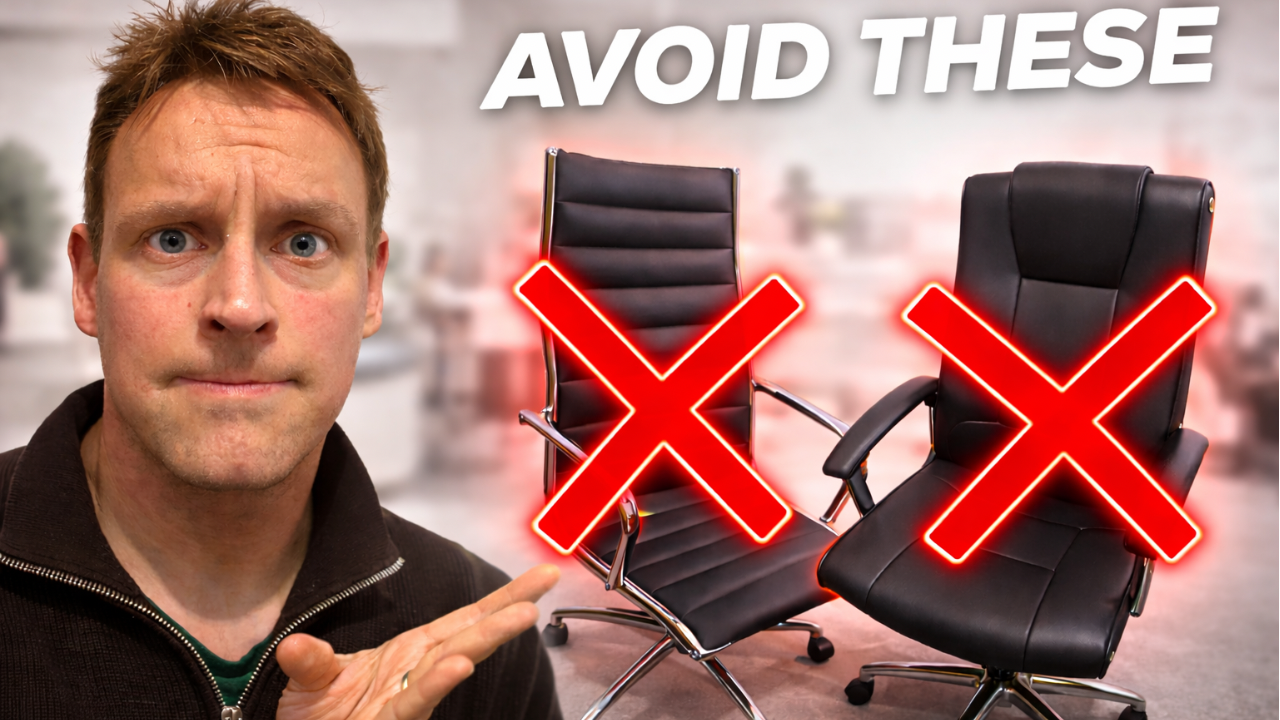
In this video, we look at two very common chair styles:
- The “Eames Style” office chair
- The classic padded “Executive Chair”
Both look appealing for very different reasons. But if you’re sitting for more than a couple of hours per day, both can start to work against your back over time.
The Problem With “Eames Style” Office Chairs
The Eames-style office chair has become hugely popular in home offices over the last few years.
And to be fair — visually, they can look fantastic.
The chrome frame, stitched leather effect and minimalist styling make them look premium and modern against a nice desk setup. But ergonomically, there are several compromises.
Common problems we see
- Fixed armrests that often stop you getting close enough to the desk
- Minimal lumbar support
- No adjustable backrest angle
- No seat depth adjustment
- A “hammock-like” seat feel that lacks proper structure
- Pressure behind the knees for shorter users
Initially, many people describe these chairs as “comfortable enough”. But after an hour or two, the problems usually begin.
You may start to notice fidgeting, sliding forwards, slouching, tightness in the lower back or even discomfort behind the legs.
The issue is not always immediate pain. It is the compound effect of poor support over time.
Because the chair cannot adapt to you, your body starts adapting to the chair instead.
Why Executive Chairs Can Also Cause Back Pain
Executive chairs are almost the opposite problem.
Where the Eames-style chair often feels too rigid and unsupported, the executive chair can fool people with softness and padding.
At first, they often feel plush, comfortable, supportive and almost luxurious. But over time, the soft foam and reclining posture can encourage poor sitting habits.
What typically happens
- You gradually slide forwards in the chair
- You recline excessively
- You lose lumbar support
- Your pelvis tilts backwards
- Your lower back collapses into the chair
A lot of these chairs also develop movement and instability quite quickly. You may notice creaking, leaning to one side, uneven reclining or the foam compressing permanently over time.
The result is a chair that starts behaving more like a sofa than a proper workstation chair.
And whilst that may feel relaxing initially, it is usually not ideal if you are trying to work comfortably for 6–8 hours per day.
The Real Problem Is Duration
This is the important part.
Neither of these chairs are automatically “bad”.
If you are answering a few emails, doing homework, using the family computer casually or sitting for 30–60 minutes, you may never notice an issue.
But if you are spending multiple hours per day working at a desk, small ergonomic problems start to compound.
That is when we begin seeing more persistent low back pain, hip tightness, stiffness when standing up, constant fidgeting and difficulty getting comfortable.
What Should You Look For Instead?
If you work at a desk regularly, your chair needs to adapt to your body — not the other way around.
Key features that genuinely matter include:
Adjustable armrests
Fixed armrests are one of the biggest issues we see clinically. They often force the shoulders into awkward positions or stop you sitting close enough to the desk.
Seat depth adjustment
This is important for both shorter and taller users. Too much pressure behind the knees can quickly become uncomfortable.
Adjustable backrest
Your lumbar support should match your body shape and height, rather than forcing you into one fixed position.
Dynamic movement
Good ergonomic chairs encourage subtle movement and posture changes throughout the day rather than locking you into one position.
Chiropractor’s Verdict
From a chiropractor’s perspective, these chairs tend to fail people with back pain not because they are cheap or stylish, but because they lack adaptability.
The Eames-style chair often leaves people unsupported and fidgeting.
The executive chair often encourages excessive reclining and slouching.
Both become more problematic the longer you spend in them.
If you are sitting for several hours per day, investing in a chair designed around adjustability and long-term support can make a noticeable difference to your comfort and productivity.
Final Thoughts
A good office chair should not just look nice.
It should fit your body, support movement, work with your desk setup, stay comfortable for long periods and reduce the need to constantly shift position.
Most importantly, it should suit the job you are actually doing.
If you are currently working in one of these chair styles and struggling with back pain, there is a good chance your setup may be contributing more than you realise.
Need help choosing the right chair?
At Well Adjusted Seating, we specialise in chiropractor-led ergonomic seating advice for home offices and workplaces.
You can explore our chair range, book a consultation, or visit Sit School™ for more practical desk setup advice.



Leave a comment
This site is protected by hCaptcha and the hCaptcha Privacy Policy and Terms of Service apply.