

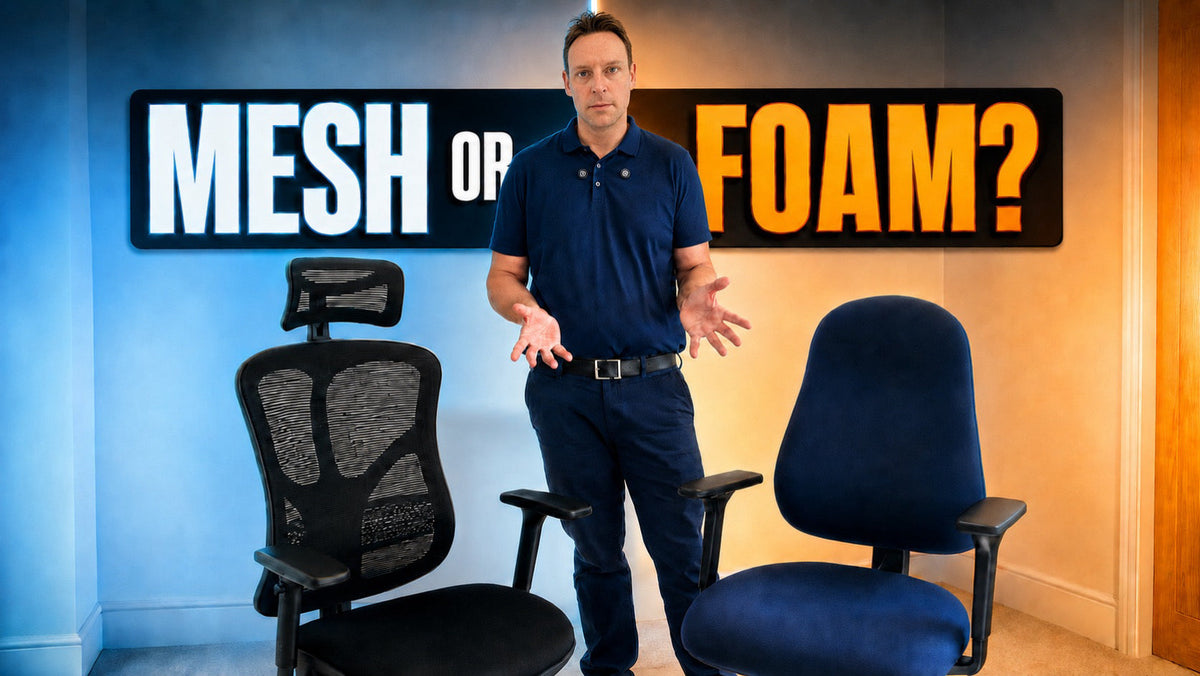
When you’re choosing an office chair, one of the first decisions seems to be whether to go for mesh or foam. Mesh is often described as cooler and more modern. Foam is seen as the traditional, cushioned option. But is one actually better, or does it come down to how you sit and what you need from the chair?
Neither material is automatically right or wrong. The feel of the seat and backrest matters, but so do the chair’s adjustments, its build quality and how long you spend sitting in it. In many cases, a hybrid—a mesh back with a foam seat—can offer a useful balance.
What do we mean by a mesh or foam chair?
A mesh chair has a woven, tensioned material on the backrest, the seat, or both. Some chairs use mesh across the whole chair, while others combine a mesh back with a padded seat. That hybrid design is common because people can enjoy the lighter, more breathable feel of mesh behind them while still having a cushioned seat.
A foam chair usually has a padded seat and may also have a foam and fabric backrest. The foam can vary considerably: from a thin, basic cushion to thicker, layered designs that may include memory foam or pocket springs. So “foam” doesn’t tell you by itself how comfortable or durable a chair will be.
Mesh office chairs: the benefits and drawbacks
One of mesh’s main advantages is its open, airy feel. If you work in a warm room or tend to feel hot when sitting, a mesh back—or a mesh seat and back—may feel more breathable than a thickly padded chair. Some people also like the flexible, responsive sensation of sitting on a tensioned surface.
Quality makes a big difference. A well-made mesh seat should feel supportive and hold its tension. On a poor-quality chair, the mesh may feel too soft, unstable or uneven. If you lean to one side, for example, you don’t want the seat giving way in a way that makes you feel tilted. Look for a chair with a stable frame and mesh that feels supportive when you try it.
Mesh can also be practical in a shared office because it is often relatively easy to wipe down. However, spills and crumbs can still be awkward depending on the mesh design, so consider how the chair will be used and cleaned.
Foam office chairs: comfort, choice and care
A foam seat often feels familiar as soon as you sit down. It can provide a cushioned surface, and there is plenty of variety in how it is built: seat width and shape, foam thickness, upholstery, memory foam layers and even pocket springs. The front edge of a foam seat may also feel less restrictive than the frame around some mesh seats.
But a thicker cushion isn’t automatically a better cushion. Lower-priced chairs may use materials that flatten, wear or feel uncomfortable over time. Fabric can fray or pick up marks, and foam can lose its shape. When you can, find out about the seat construction and upholstery rather than judging the chair by how soft it feels for the first few minutes.
Some foam seats are deliberately shaped or moulded. That can feel comfortable, but if the padding has compressed and lost its support, the chair may simply be holding the shape of a worn-out seat. Check that it still feels supportive across the area you sit on.
Don’t overlook the backrest and mechanism
The material is only one part of the chair. A mesh back can feel light and supportive when it is paired with a good lumbar support and a backrest that adjusts to your height. A foam backrest can also work well, especially if you prefer a more cushioned feel or a chair with an asynchronous mechanism that you set up to suit yourself.
Think about how the chair moves, too. A synchronous mechanism links the movement of the seat and back as you recline. Some people like that coordinated movement; others prefer a chair they can adjust and set in a particular position. The material won’t determine which mechanism is right for you, so try to compare the whole chair.
Fit and adjustability matter more than the material
Before choosing mesh or foam, make sure the chair can be adjusted to fit you. Useful features may include backrest height adjustment, seat-depth adjustment, supportive armrests that move to suit your desk, and a mechanism you can comfortably use. The right adjustments depend on your body and how you work, but you want the chair to adapt to you—not force you into one fixed position.
Then consider the material. If you have enjoyed mesh chairs before, you may prefer that feel again; just make sure the mesh is stable and well made. If you prefer cushioning, look for a foam seat with quality padding and upholstery. If you’re unsure, a mesh-back, foam-seat hybrid is a sensible option to try.
Try the chair for more than five minutes
It’s easy to choose a chair because it looks good, or because you’ve seen one in someone else’s office. But the chair has to feel right for you. Sit in it for long enough to notice the seat, the back support and how easy it is to move and adjust. If possible, compare a mesh chair, a foam chair and a hybrid side by side.
Think about the hours you’ll use it, too. If you sit for around six hours on a working day, that adds up to roughly 7,200 hours over five years. A chair is worth judging by how it feels over time, not just by its appearance or first impression.
So, which one should you choose?
Choose mesh if you like its breathable, responsive feel and the chair’s mesh is stable and supportive. Choose foam if you prefer cushioning and can find a chair with good-quality padding and upholstery. Try a hybrid if you want the airy feel of a mesh back with a more traditional cushioned seat.
There isn’t one best material for everyone. The best choice is a chair that fits you, gives you the adjustments you need and feels comfortable for the way you work. Don’t buy on looks alone—and don’t assume a material will make up for a poor fit or a weak mechanism.
At Well Adjusted Seating, we help people compare chairs and find the right fit. Get in touch to arrange a chat or showroom visit.




Leave a comment
This site is protected by hCaptcha and the hCaptcha Privacy Policy and Terms of Service apply.