


Prefer to watch instead of read?
You can watch the full video below, or continue reading for the written guide and key takeaways.
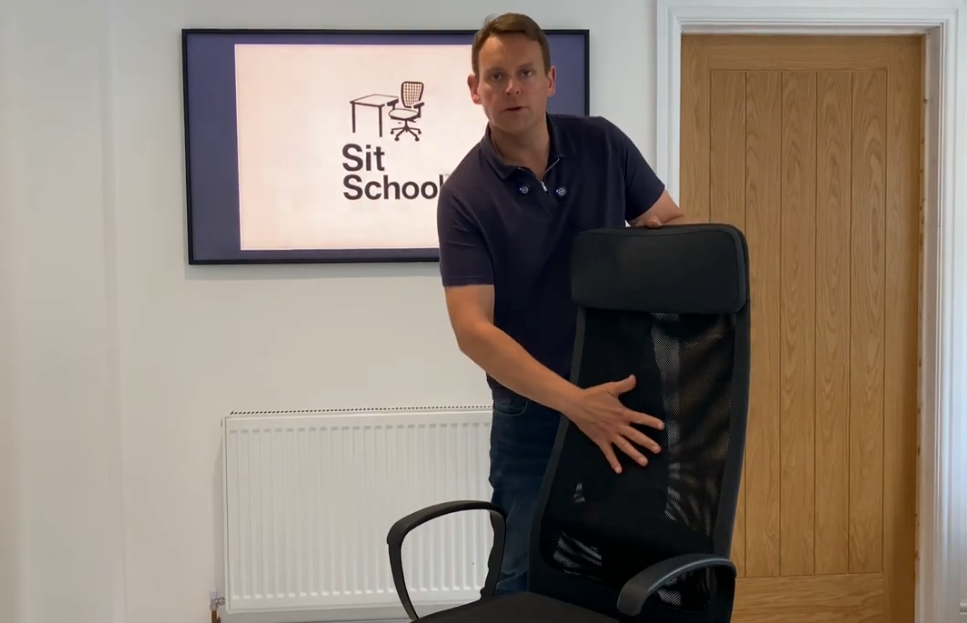
In this article, I'll explain why the IKEA MARKUS remains a popular office chair, who it's well suited to, and the signs that you may have outgrown it. I'll also cover the ergonomic features I believe are worth looking for if you're considering an upgrade.
Have You Outgrown Your IKEA MARKUS? A Chiropractor's Perspective
The IKEA MARKUS has become one of the UK's most recognisable office chairs, and it's easy to see why.
It's reasonably priced, comes from a trusted manufacturer and has built a reputation for lasting many years. I've seen plenty of MARKUS chairs that are still being used after 10 years or more.
But that doesn't necessarily mean it's still the right chair for you.
As a chiropractor, I often see people who bought a chair several years ago when they were spending less time at a desk, working in a different role or simply had different needs. The chair hasn't changed, but they have.
So how do you know when you've outgrown an IKEA MARKUS and it's time to look at something more adjustable?
First of all, what does the MARKUS do well?
Before talking about its limitations, it's only fair to recognise why the MARKUS has become so popular.
For around £160, it offers good value for money, has a high backrest that suits many taller users and is built by a company with an excellent reputation. It looks smart in both home offices and workplaces, and many examples continue to provide reliable service after years of daily use.
I don't think it's a bad chair at all.
In fact, for many people it's an excellent first office chair.
The question is whether it's still the right chair for the amount of sitting you're doing today.
1. Fixed armrests can become frustrating
One of the biggest limitations of the MARKUS is that the armrests don't adjust.
If they happen to suit your body and your desk, that's great. But if they're slightly too high or too low, there's very little you can do about it.
Poorly positioned armrests can encourage shrugged shoulders, unsupported forearms or awkward reaching towards the desk, all of which may contribute to discomfort over a long working day.
Many modern ergonomic chairs include adjustable armrests that move up and down, forwards and backwards and sometimes even rotate inwards. These extra adjustments make it much easier to position your shoulders and arms comfortably.
2. Lumbar support isn't one-size-fits-all
As a chiropractor, lumbar support is one of the first things I look at.
The MARKUS includes built-in lumbar support, but it stays in one position. If that happens to line up with your lower back, it may feel perfectly acceptable. If it doesn't, you can't move it to where you need it.
More advanced ergonomic chairs often allow the lumbar support or backrest height to be adjusted, helping you achieve a better fit for your own body shape rather than expecting your body to adapt to the chair.
3. Your working life may have changed
This is perhaps the biggest reason people outgrow the MARKUS.
When you originally bought it, you might have spent three or four hours a day sitting down.
Now you may be working from home several days a week, spending long periods on Teams meetings or using the same chair for work during the day and gaming or studying in the evening.
Those extra hours soon add up.
A chair that felt perfectly adequate for occasional use may no longer provide the support you need for prolonged daily sitting.
4. Adjustability becomes more important the longer you sit
One feature I particularly value is seat depth adjustment, sometimes called a seat slide.
This allows you to position yourself properly against the backrest while maintaining a comfortable gap behind the knees.
Combined with adjustable lumbar support, adaptable armrests and a well-designed recline mechanism, these features allow the chair to work with your body rather than forcing you into one position.
The longer you spend at your desk, the more valuable these adjustments become.
5. Movement is often overlooked
One area many people don't think about is movement.
Good ergonomic chairs often include synchronous mechanisms that allow the seat and backrest to move together in a controlled way while still supporting you.
That gentle movement can make long meetings, video calls or focused desk work feel far more comfortable than sitting rigidly in the same position for hours.
Think about your chair like you would a mattress
There's an interesting comparison to be made with mattresses.
If your mattress developed a large dip in the middle or stopped supporting you properly, you'd probably notice fairly quickly and start thinking about replacing it.
Office chairs are different.
The changes happen gradually, and because you're concentrating on your work, you often don't realise your chair is no longer giving you the support it once did.
It's only when you begin to experience stiffness at the end of the day, back pain or general discomfort that you start to question whether the chair is still right for you.
What should you look for in your next chair?
If you're considering moving on from an IKEA MARKUS, I'd recommend looking beyond appearance or brand name and focusing on adjustability.
- Adjustable armrests
- Seat depth adjustment (seat slide)
- Adjustable lumbar support
- Height-adjustable backrests
- A quality synchronous recline mechanism
- A chair that can be tailored to your body and workspace
In my experience, these features become increasingly important as your working hours increase.
Final thoughts
I want to be clear that I don't think the IKEA MARKUS is a bad chair. It's popular for good reason and has served many people extremely well.
However, if your working habits have changed, you're spending longer at your desk or you're beginning to notice discomfort at the end of the day, it may simply be that you've outgrown it.
At Well Adjusted Seating, we believe the best office chair isn't necessarily the most expensive one. It's the one that fits your body, supports the way you work and continues to do so year after year.
Taking the time to choose the right chair is one of the best investments you can make in your comfort, productivity and long-term wellbeing.
```



Leave a comment
This site is protected by hCaptcha and the hCaptcha Privacy Policy and Terms of Service apply.