

Watch the Video
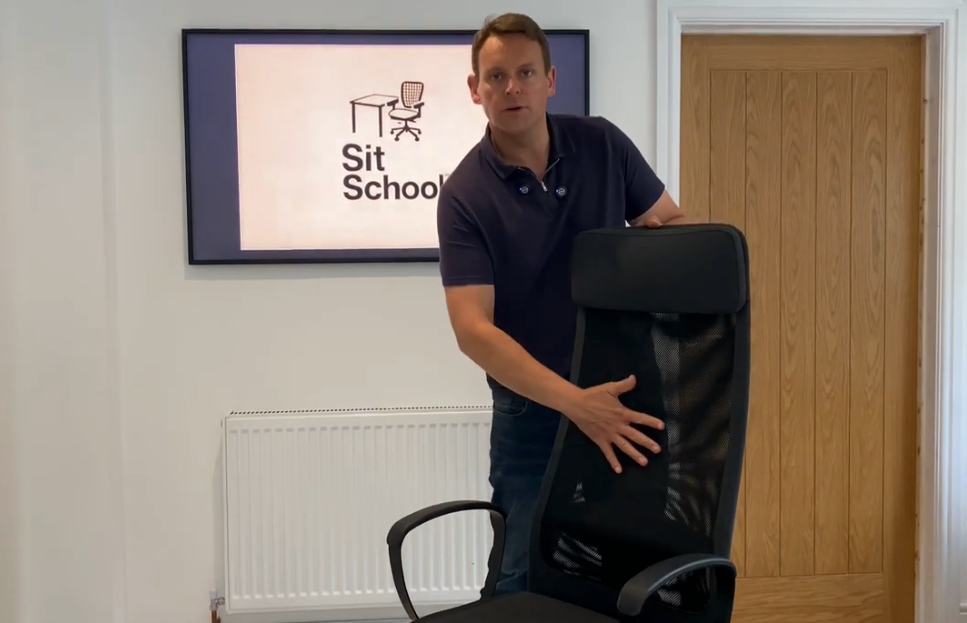
Prefer watching to reading? In this video, chiropractor John Stephens explains the three most common signs that your office chair has reached the end of its useful life and what to look for when choosing a replacement.
Most people would replace a mattress that was sagging in the middle. If a sofa lost its support and became uncomfortable, most of us would start thinking about replacing it.
Office chairs are often treated very differently.
Many people spend four, six or even eight hours a day sitting on a chair that is years beyond its best, without realising how much support it has lost over time.
As a chiropractor, I regularly see people struggling with discomfort at work while sitting on office chairs that are simply worn out.
Here are three signs it may be time to replace yours.
1. You are constantly fidgeting
Movement during the working day is healthy. Shifting position, standing up, stretching and changing posture can all help keep your joints and muscles moving.
However, there is a difference between healthy movement and constantly searching for a comfortable position.
If you find yourself regularly shifting in your chair, sitting on one leg, tucking a foot underneath you, sliding forwards, perching on the edge of the seat or constantly stretching your back, your chair may no longer be supporting you properly.
Older chairs often lose their shape and support over time. When that happens, your body starts trying to compensate.
2. The chair is physically worn out
Take a close look at your chair and ask yourself:
- Is the seat foam flattened?
- Has the seat developed a permanent dip?
- Is the mesh sagging?
- Are the armrests loose or unstable?
- Does the gas lift slowly sink during the day?
- Are the wheels sticking or difficult to move?
- Is the fabric worn, torn or damaged?
One common issue is when the seat cushion begins to mould around your hips and pelvis. This can feel comfortable at first, but it often means the foam has lost its ability to provide proper support.
Most office chairs do not fail overnight. They gradually lose support over many years until they are no longer doing the job they were bought for.
3. You feel worse at the end of the day
The most important sign is often how you feel after sitting in the chair.
A good office chair should support you through the working day. It will not solve every back problem, but it should not leave you feeling worse either.
If you regularly experience lower back stiffness, tight hips, aching shoulders, general discomfort or fatigue from sitting, it is worth taking a closer look at your chair and workstation.
This can be particularly noticeable with hybrid working. Your office chair at work may be supportive, while the older chair at home may no longer be suitable for long working days.
What should you look for in a replacement chair?
If your current chair is past its best, avoid replacing it with another basic chair that offers little adjustment.
Look for features that allow the chair to be adjusted to suit your body and the way you work.
- Height-adjustable backrest
- Adjustable armrests
- Good lumbar support
- Seat depth adjustment
- Recline and tilt functions
- Adjustable seat height
- Quality cushioning and support materials
Final thoughts
An office chair does not last forever.
Like a mattress, it gradually loses its ability to support you over time.
If you are constantly fidgeting, your chair is visibly worn out or you are ending each day feeling stiff and uncomfortable, it may be time to consider a replacement.
The right chair should support your body, encourage movement and help make sitting more comfortable throughout the working day.
If you are unsure whether your chair is right for you, Well Adjusted Seating offers ergonomic advice, chair fitting and a free 48-hour chair trial for customers within 15 miles of Emsworth.
Because choosing the right chair should not be a guessing game.



Leave a comment
This site is protected by hCaptcha and the hCaptcha Privacy Policy and Terms of Service apply.